

World Cup 2026 Group F AI Predictions
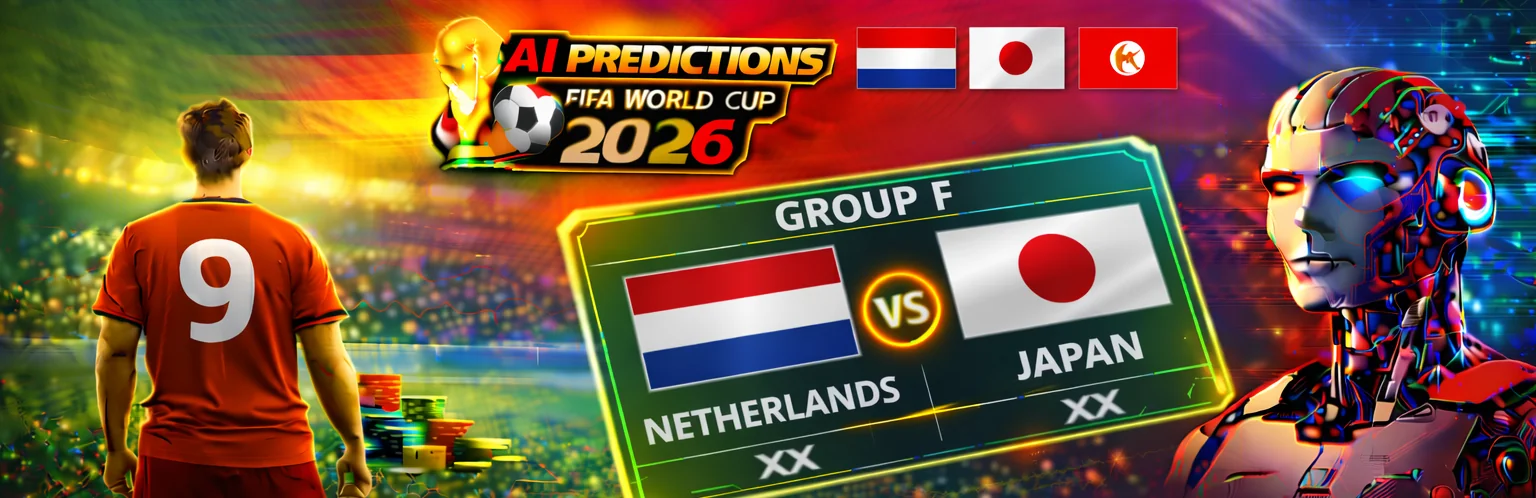
FIFA World Cup Group F at the 2026 FIFA World Cup features four teams competing for a place in the knockout stage: the Netherlands, Japan, the UEFA Path B winner, and Tunisia. Each team enters the competition with distinct tactical characteristics and qualification backgrounds, which directly influence betting assessments. The group stage is a critical phase of the World Cup, as points gained or lost in every match determine progression to the next round.
Group F matches are scheduled to be played in North America, within the host venues allocated to this group for the 2026 tournament. The fixtures will take place between mid-June and late June 2026, with specific dates and kick-off times assigned to each match according to the official FIFA schedule. These timing details are relevant for bettors, as rest periods, travel demands, and climate conditions may affect team performance and overall match dynamics.
How World Cup Group F AI Predictions Are Created
World Cup Group F AI predictions are generated using artificial intelligence systems that analyze a broad range of statistical and contextual data. The AI models process historical team performance, head-to-head records, recent match results, scoring and defensive metrics, and both home and away performance statistics. In addition, the current situation in the competition—such as group standings and goal difference scenarios—is integrated into the analysis.
Bookmaker odds are also included in the evaluation process. By comparing statistical probabilities with available betting markets, artificial intelligence identifies potential value opportunities. This structured approach allows each betting tip to be based on measurable indicators rather than subjective opinion. The result is a data-driven assessment designed to support informed betting decisions for every match in Group F.
Practical Use of AI-Based Betting Tips
For bettors following FIFA World Cup Group F, AI projections provide a practical framework for evaluating different betting options. These may include standard match outcome bets, total goals markets, both teams to score, or handicap lines. Each tip is derived from a comprehensive comparison of team form, tactical efficiency, squad depth, and performance trends against similar opponents.
At the same time, AI predictions do not replace independent analysis. Factors such as confirmed starting line-ups, injuries, tactical adjustments, and in-tournament momentum can significantly influence match outcomes. Artificial intelligence enhances the decision-making process by organizing complex data into clear probability estimates, but responsible betting requires combining these insights with up-to-date information.
The Netherlands’ tournament experience, Japan’s structured defensive approach, the competitive profile of the UEFA Path B winner, and Tunisia’s adaptability against higher-ranked teams are all variables assessed within the AI framework. By reviewing World Cup Group F AI predictions alongside personal research, bettors can approach each match in this stage of the World Cup with a more systematic and balanced strategy.